RTINGS gets 1.3M visits a month from Google, and almost all of them land on cheap "best of" lists, not on its expensive lab tests.
Think "best headphones" or "best TVs".
Pages like those are its 5 most visited, and not one of them is a review of a single product.
That's odd, because RTINGS owns a real testing lab. It buys every product and measures it with proper equipment.
Yet people find it through the simple lists built on top of that lab. Here are 7 lessons you can copy, plus the one thing you can't.
Find the pages that bring visitors
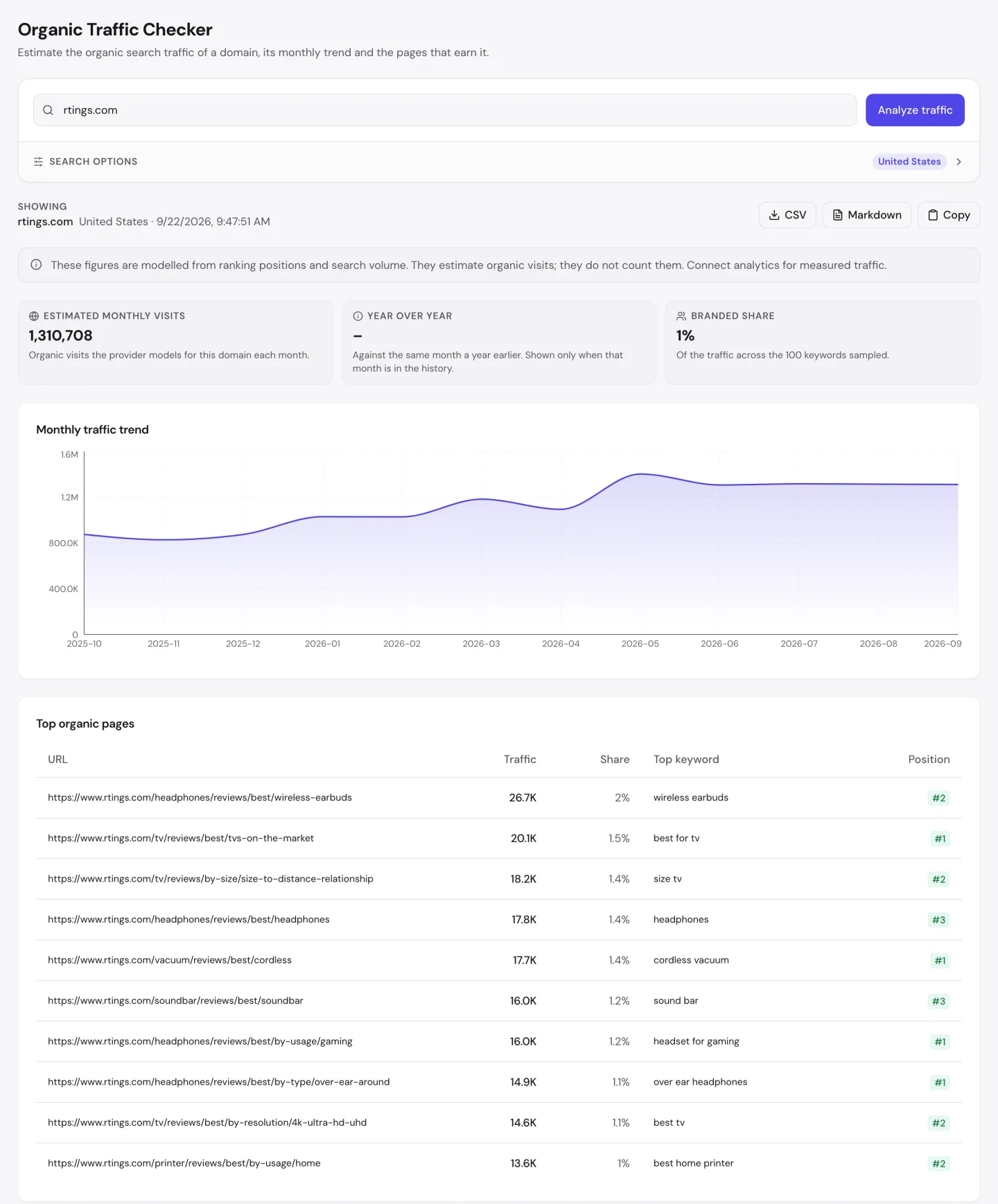
We started with our free Organic Traffic Checker. It estimates how many people visit a site from Google each month.
For RTINGS, the answer is about 1.3M.
Then we looked at which pages bring those people in. The top 5 are best wireless earbuds, best TVs, a TV size guide, best headphones and best cordless vacuums.
Every one of them sits in Google's top 3 results.
Here's the biggest one. The earbuds list opens with a bold claim: more than 900 headphones bought and tested.
Right under that, it shows the date it was last updated.
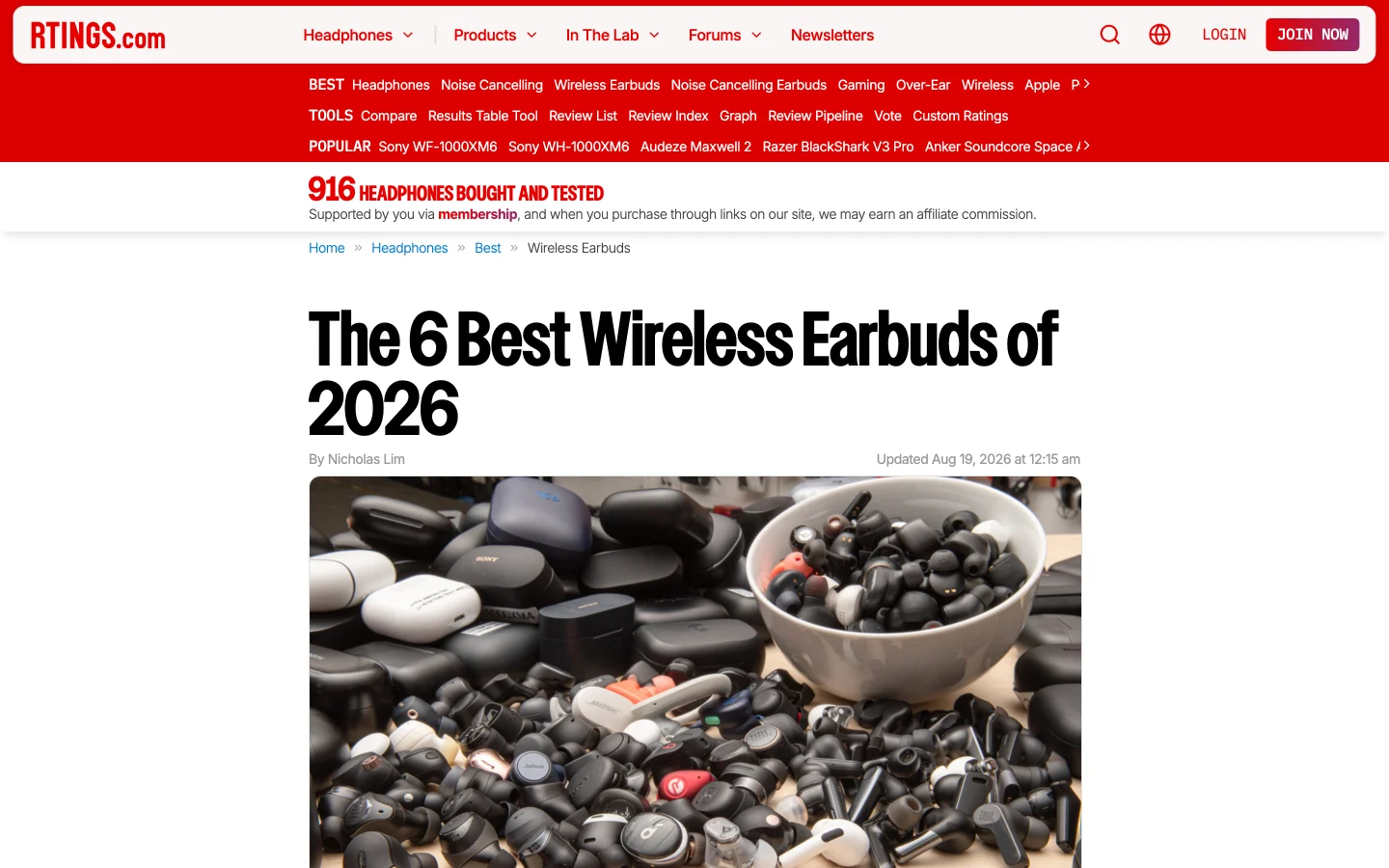
That's the whole trick. People land on the list, and the lab is the reason they trust it.
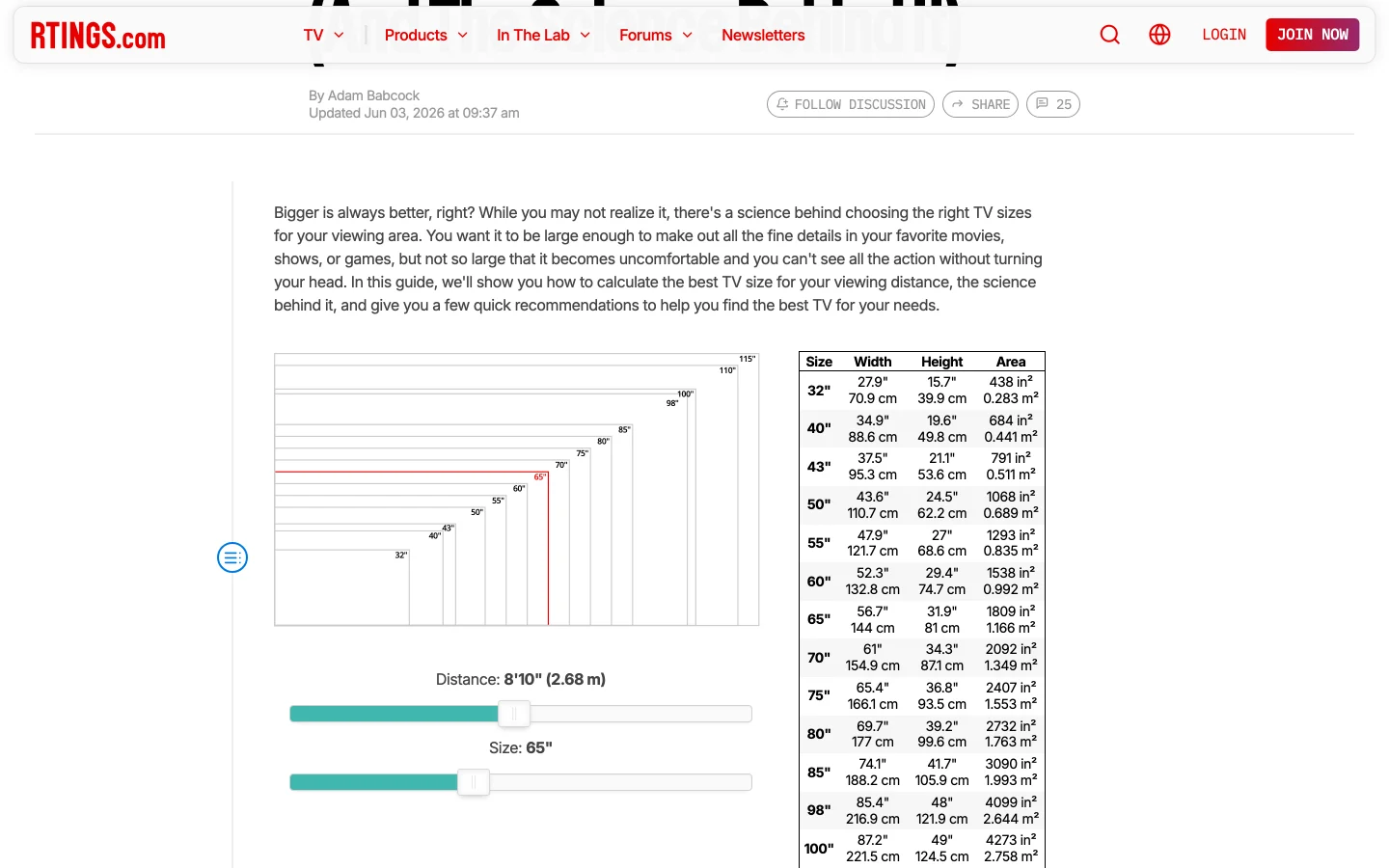
The TV size guide is a little different. It's really a calculator.
You drag 2 sliders, one for how far away you sit and one for the screen size. Then it draws the TVs to scale, so you can see the difference.
That one tool brings in about 18K visits a month.
Now look at what's missing.
The lab reviews, where RTINGS tests one product in depth, don't show up in the top pages at all.
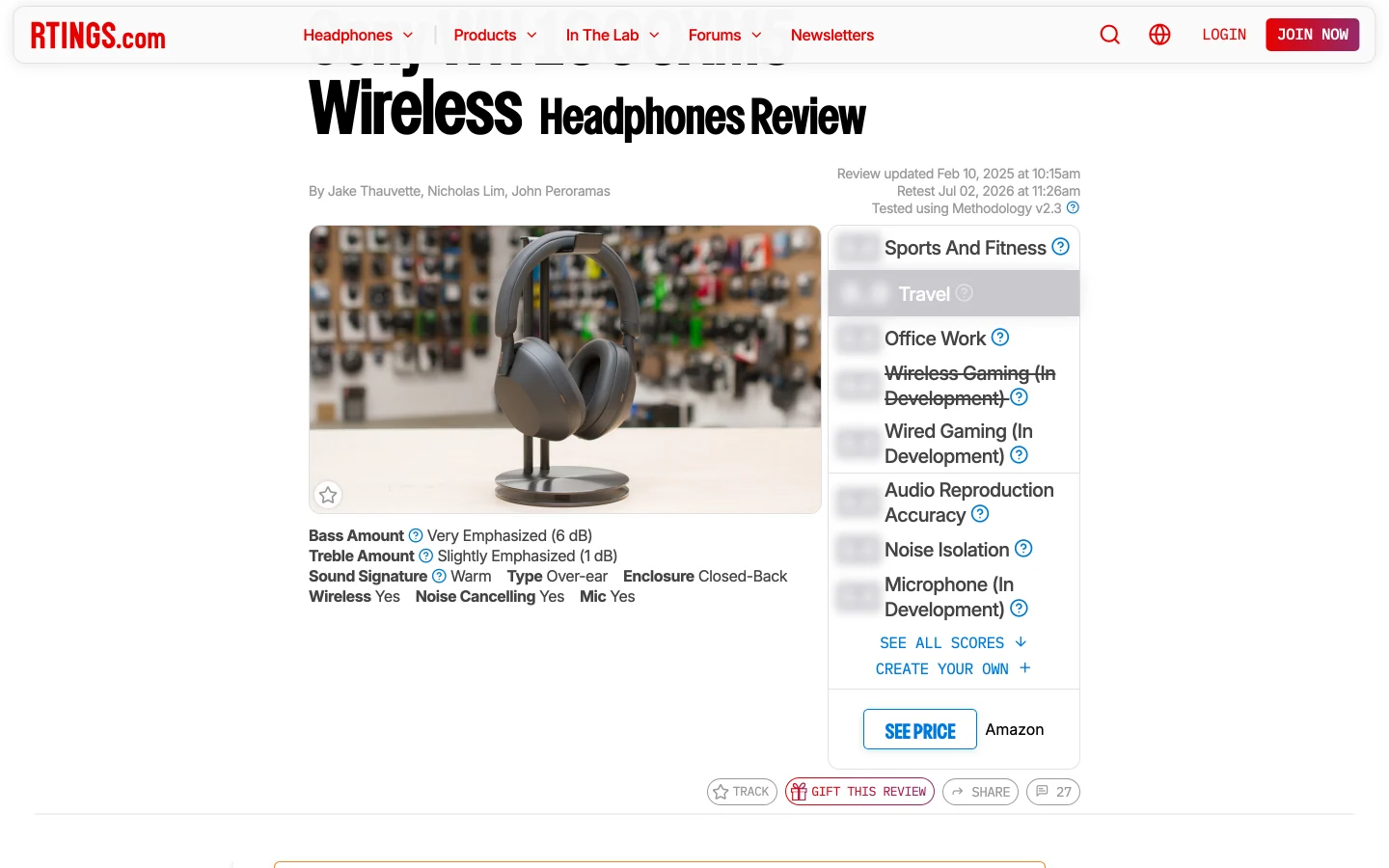
Here's one of them, the review of Sony's WH-1000XM5 headphones. It lists the exact test method, and it even measures how strong the bass is.
It's careful, costly work. And it isn't in the top 10.
So the costly pages feed the cheap ones, and the cheap ones get found.
Your site may have the same gap. Here's how to check it in 5 minutes.
- Put your domain into the Organic Traffic Checker.
- Look at the list of your top pages.
- Find the page you worked hardest on, and see where it lands.
If it's nowhere near the top, you're not alone. A quick list often beats a deep guide, because the list matches what people type.
Build lists, not just reviews
This is the lesson you can use today.
Think about how people shop.
If you haven't picked your headphones yet, you can't search for a model name. So you type "best headphones" instead.
The review earns trust. The list gets the visit.
There's a name for making lots of lists this way: programmatic SEO. It means you design one page, then fill it with different products each time, using data you already have.
RTINGS does exactly that. Every "best of" page uses the same layout and pulls in its own test results.
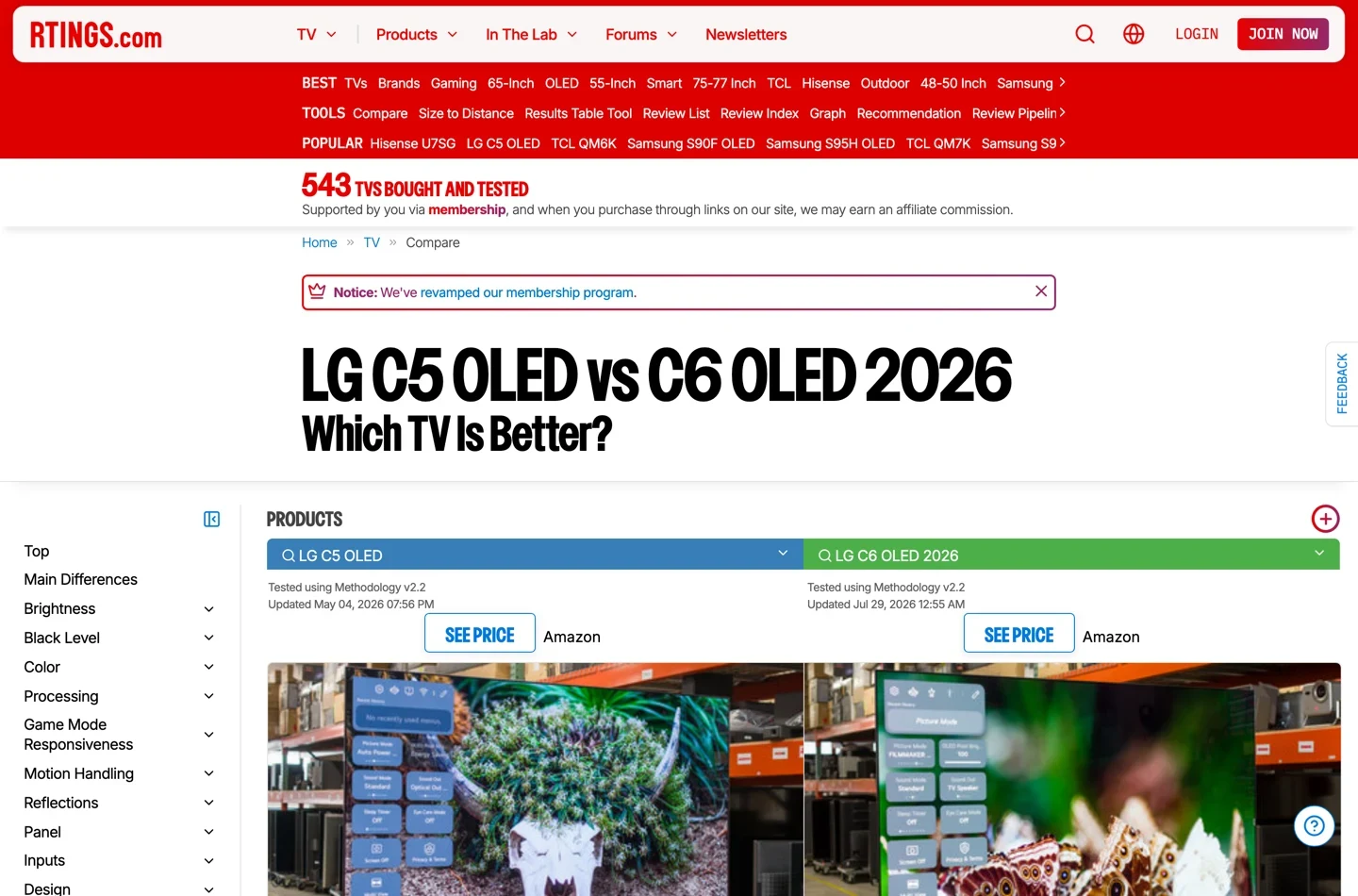
Most experts do the opposite. They pour their time into long reviews and treat the list as an afterthought.
But the list is where the searches are.
You can prove it for your own topic. A keyword is just a phrase people type into Google, and our free Keyword Research tool shows how many people type it each month.
Here's what it found for headphones. "Best headphones" gets about 8K searches a month.
The more specific "best noise cancelling headphones" gets about 27K. That's more than 3 times as many.
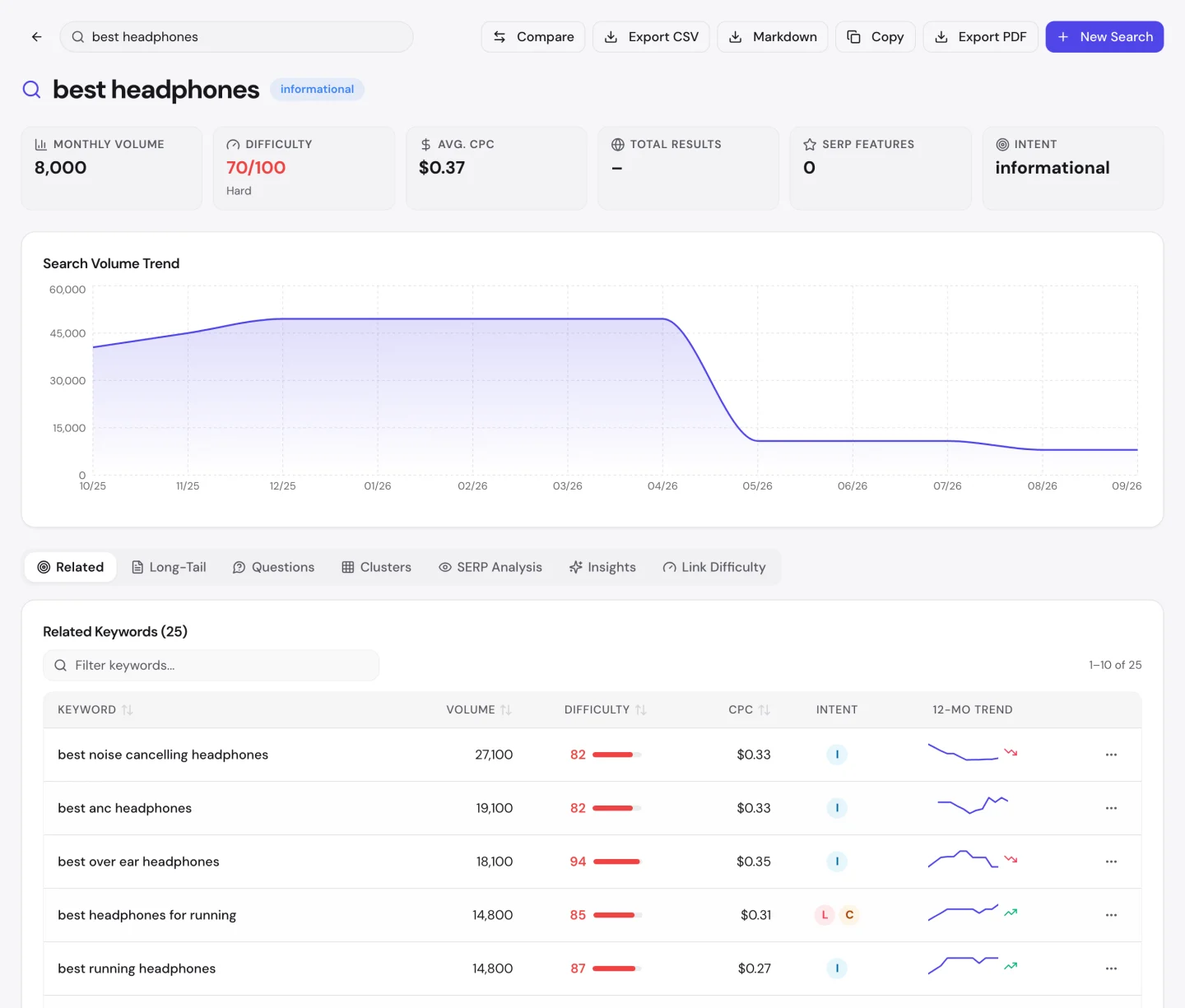
RTINGS can build a list for each of those searches from reviews it already has. You can do the same with what you already know.
Here's a 20-minute way to find the lists worth building. Say you sell coffee machines.
- Search Google for "best espresso machine" and open the top 10 results.
- Mark the weak ones. Weak means no real photos, no measurements and no date.
- Pick 3 you could beat with machines you own or can borrow.
- Turn each one into a page title, like "Best espresso machine for a small kitchen".
Weak lists are everywhere. Anyone willing to test things can beat them.
Even so, there's one gap RTINGS leaves open. A list can't answer a very specific question.
A reader might want "the best one for a small room, under $300, with a remote". The list makes them guess, and that's often when they leave.
A chat box on the page can answer that for them. That's what sem.chat does.
It's our own product, so judge it accordingly.
You train it on your own reviews, and it answers buyers on the page, on WhatsApp or on Telegram. Read a week of their questions, and you'll have ideas for your next lists.
RTINGS' biggest pages are lists, and every list goes stale when new products come out. We build those pages for you and keep them fresh, so they keep winning the search.
- Find the lists your buyers already search for
- Build them from your own tests and data
- Re-test and update them when new models land
- SEO and GEO, so AI answers quote you too
Test the products yourself
Lists only work if people trust them. Real testing is what earns that trust.
AI can rewrite every spec sheet on the internet in seconds. But it can't use a product for a month and tell you the battery lasted 6 hours when the box said 9.
Only a person who tested it can say that. Here's how to do it at your size.
- Test 3 products, not 30. A weekend is enough.
- Test them all the same way, and write down how you did it.
- Take your own photos. Stock photos prove nothing.
- Share every number you measured, even the boring ones. Other sites love to quote those.
- Come back after 30 days and add what broke or bugged you.
That last step is the one nobody can copy, because they weren't there.
It's also how RTINGS earns its links. We'll get to that in the links lesson below.
Check who searches your name
Now for the risky part.
Only 1% of RTINGS' visitors find it by typing "rtings" into Google. You can see that share in the first screenshot, next to the total.
Everyone else searches for a product, like "wireless earbuds", and happens to land on an RTINGS list.
Compare that with chess.com, the online chess site we looked at in a separate case study. There, 92% of visitors type the brand name on purpose.
So chess.com has fans who come back by name. RTINGS mostly has strangers who found a good list.
That means RTINGS has to win almost every visit again, every month, by ranking well. If its lists slip, the visitors go too.
So before you plan next year, find out which kind of site you are. The same Organic Traffic Checker report shows your brand share.
If almost nobody searches your name, treat your traffic like rent, not savings. You pay it again every month by staying the best answer.
Earn links people choose to give
This is the most unusual thing about RTINGS, and the hardest to copy.
A backlink is a link from another website to yours. Google treats each one a bit like a vote of trust.
Our free Backlink Analyzer found about 680K of them pointing at RTINGS, from 36K different websites.
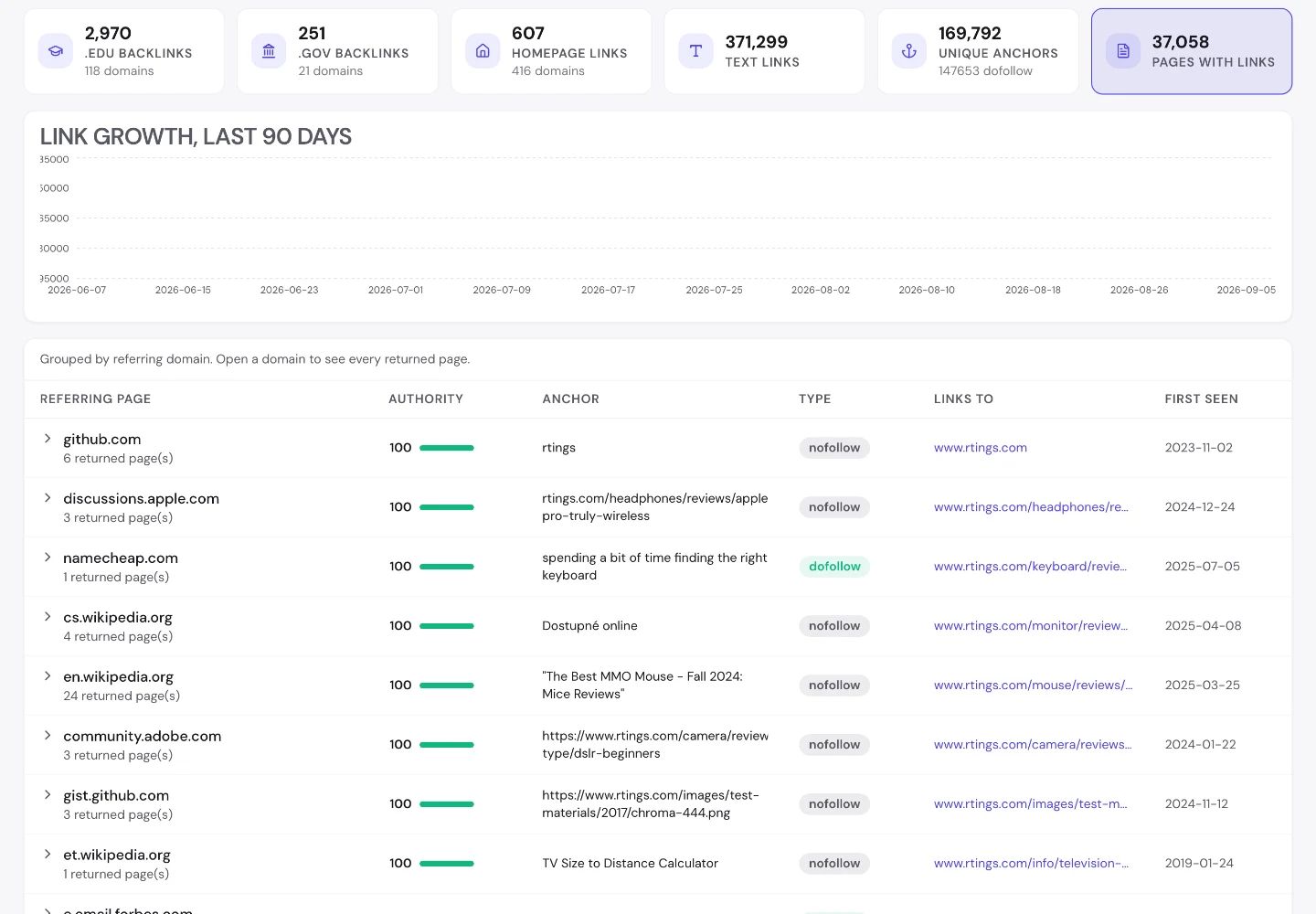
Next, we checked the anchor text. It's the clickable words on a link, like "RTINGS" or "best TVs".
On most big sites, one phrase carries a huge share of the links. On RTINGS, the top phrase is its own name, and it's only 3% of the total.
That's rare. calculator.net, a free calculator site we studied separately, has 74% of its links on one phrase.
MDN, Mozilla's big guide to web coding, has 52% on one phrase. We wrote that one up too.
When one phrase carries that much, the links usually come from something repeated, like a widget or a footer. RTINGS gets its links one at a time.
Someone writes about a TV, quotes an RTINGS test result, and links to the review. The link text is simply the review's title.
Here's how to read your own report. Lots of different link texts, with no single winner, means people chose to link to you.
One phrase carrying most of your links means a template made them. More outreach emails won't change that.
One more tip. Always write the date next to a backlink number, because RTINGS' count moved about 6% in 2 weeks.
Don't chase a perfect audit score
RTINGS is in great shape on the technical side.
Our free Website Audit checks a page for broken or missing parts that can hurt it on Google. It gave the RTINGS homepage 95 out of 100.
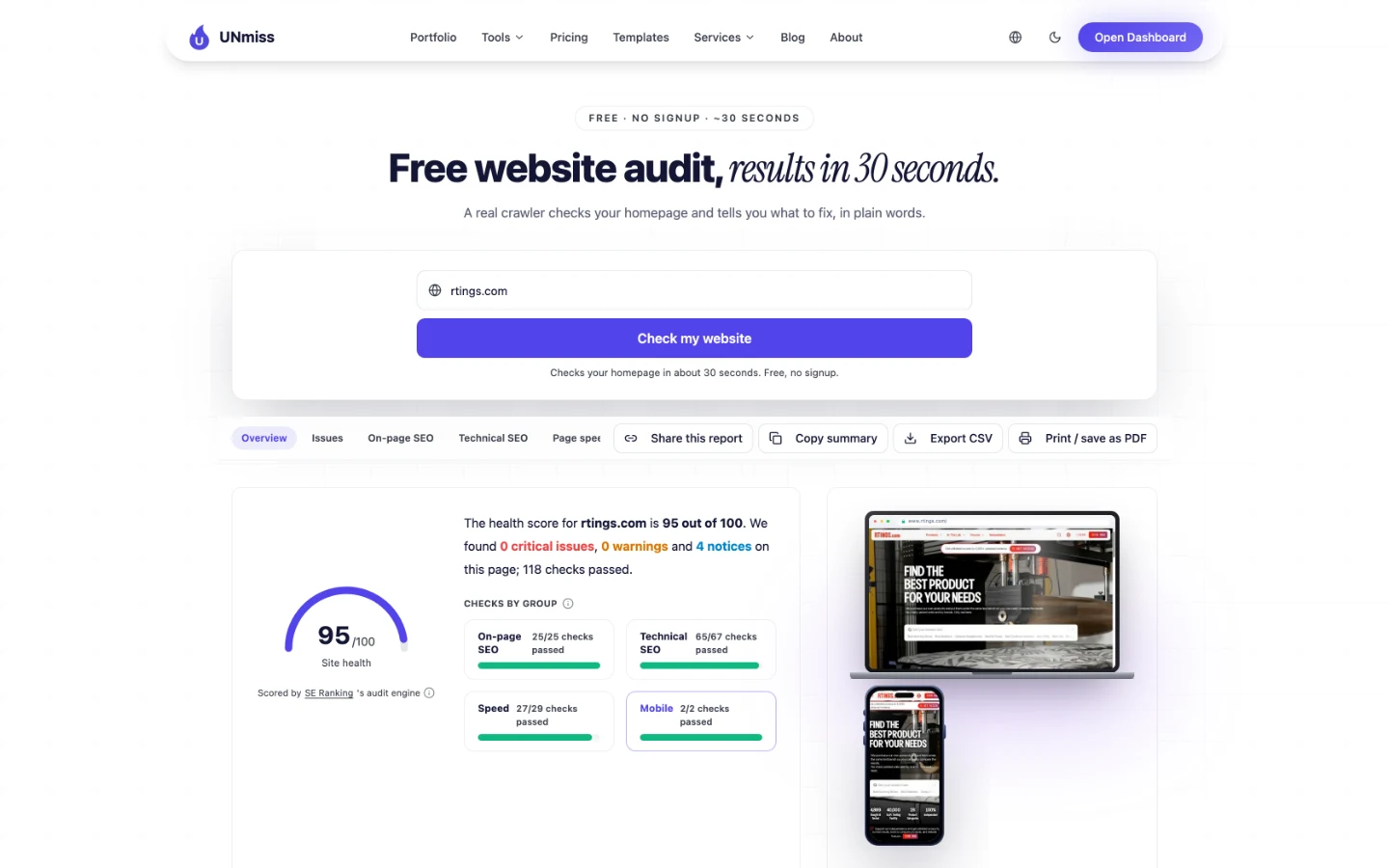
2 weeks earlier it was 90, so someone clearly fixed things.
But did the traffic jump because of it? Probably not by much.
Across every site we've measured, a high audit score never told us how much traffic a site gets.
An audit tells you what's broken on a page. It can't tell you that lists beat reviews, and that was the thing that mattered here.
So fix what the audit finds, because it's worth doing. Just don't sell it to your boss as a growth plan.
Budget to keep your lists fresh
Here's the catch with lists: they go stale.
Our free Domain Overview shows RTINGS ranking for about 1.1M keywords.
Its average position is 37. Position means where a page shows up in Google's results, so a lower number is better.
That's strong for a site this big. Docker Hub, a big download site for programmers that we studied separately, averaged 51.
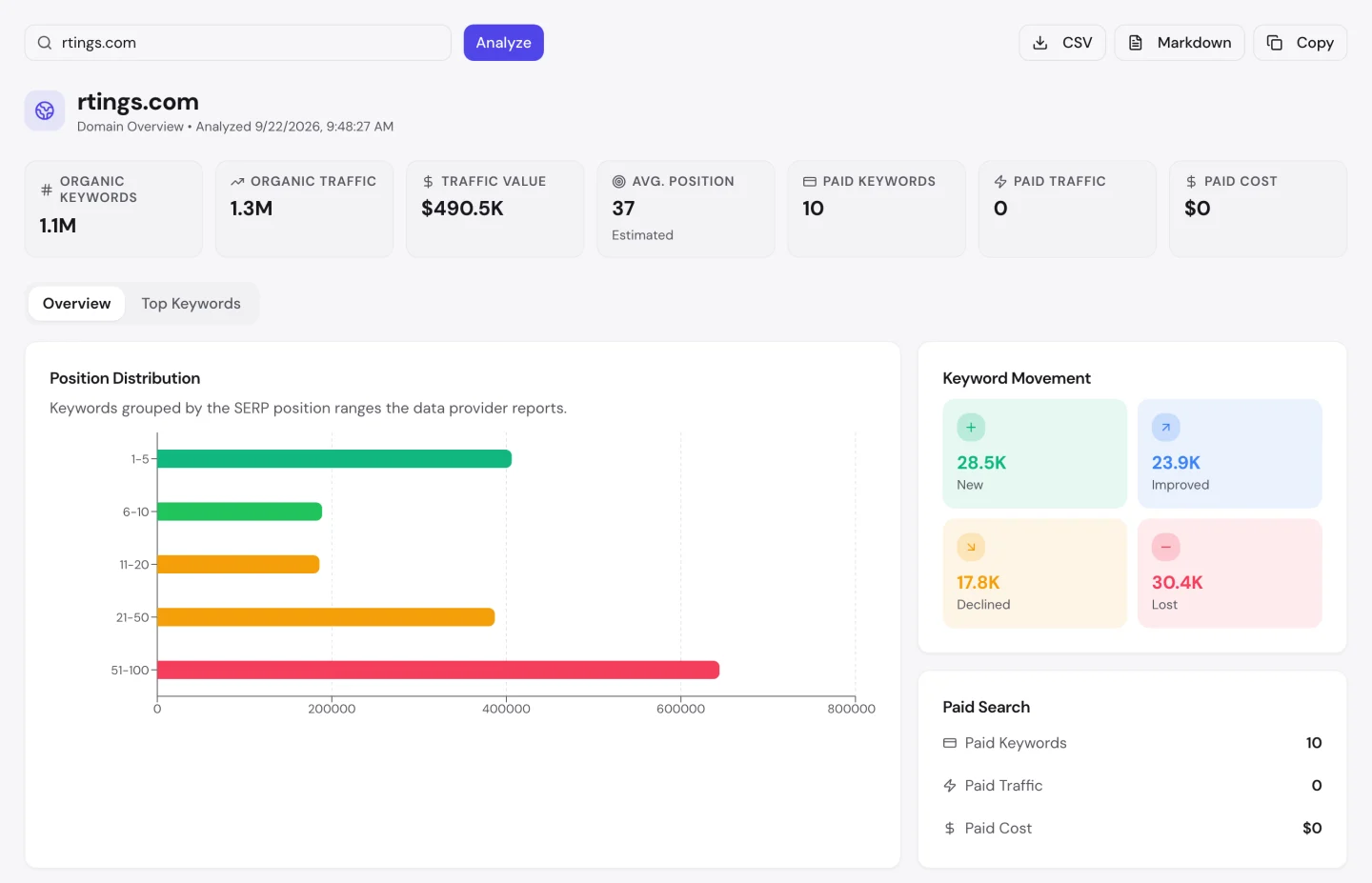
Look closer, though, and it's slowly slipping. It lost about 30K keywords and gained about 28K.
That's normal for lists. New models come out, and a "best of" page full of old ones stops matching what people search.
The tricky part is that your traffic chart won't show it at first. The big lists hold steady while the older pages quietly fade.
Your rankings show it first. So watch them with a rank tracker, a tool that checks your Google position every day.
Semrush is a good one for this. It will flag a page that's sliding before your traffic drops.
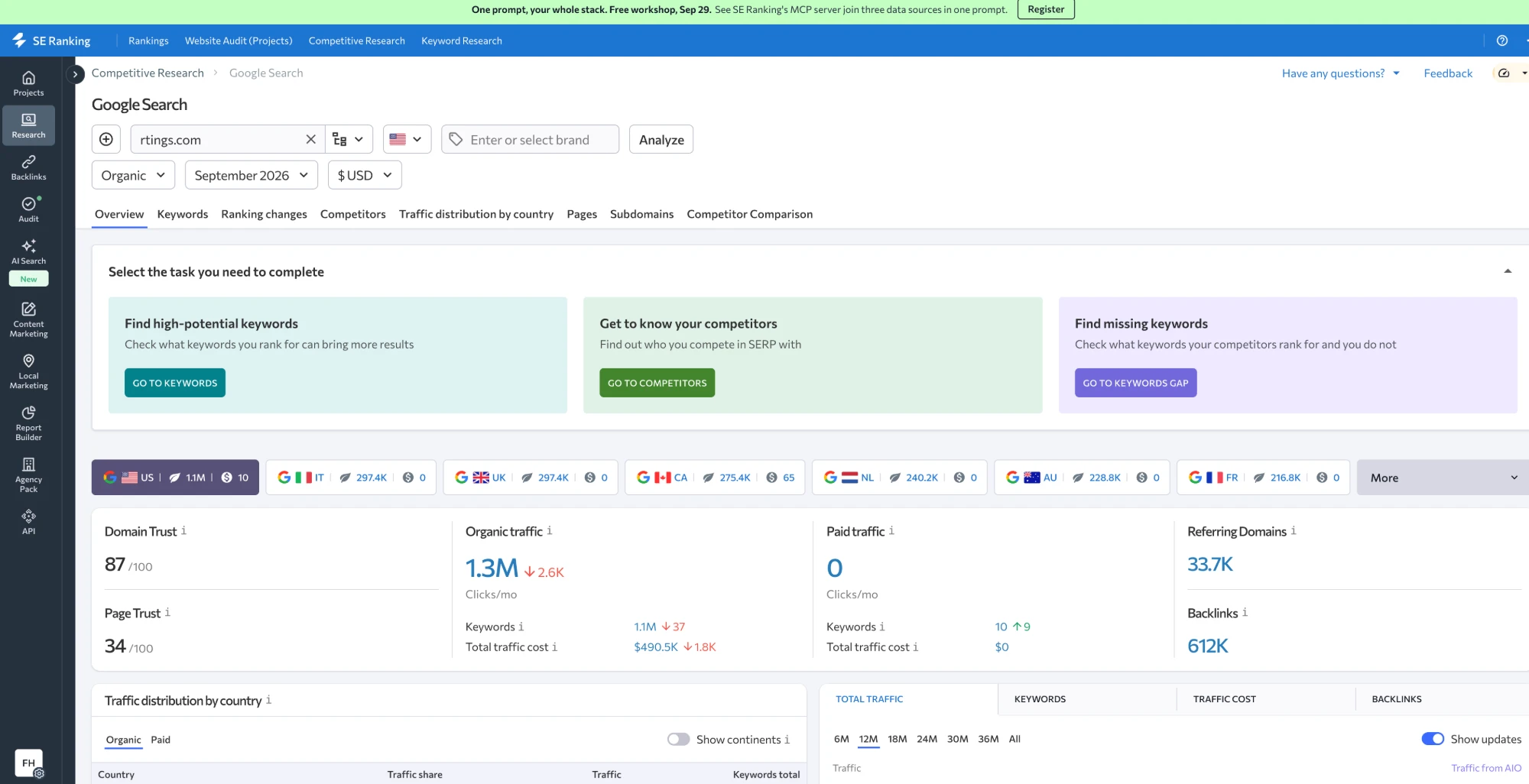
It also helps to check big numbers in a second tool. We ran RTINGS through SE Ranking as well, and it told the same story.
Here's a simple rule. Track every "best" page you own, and set an alert for a drop of 3 places.
That alert fires while the fix is an afternoon of re-testing, not a full rebuild.
And when you budget for new lists, budget for the upkeep on the same day. If you can't keep them fresh, don't start them.
All 5 of RTINGS' biggest pages are "best of" lists, and not one is a review. Our Organic Traffic Checker shows the same top-pages list for any site, so you can see what's really getting found on yours.
- The same report that found 5 lists and 0 reviews
- Visits, top keyword and Google position for every page
- 3 checks a day, no signup, no card
What you cannot copy
First, the part you can't copy: the lab.
RTINGS buys every product at full price and tests it with proper equipment. Then it publishes the raw results.
That costs a lot, and it's why people trust its lists.
Copy the layout and you get a list. Add your own test data and you get something much closer to RTINGS.
Now a few honest notes on the numbers.
Most figures were measured in September 2026. The August figures come from our own earlier checks on the same tools.
The traffic numbers are estimates for the US. Nobody outside RTINGS can count its real visits, so tools work them out from rankings and search volume.
Tools also count links in different ways. Ours found about 680K backlinks, and the second tool above found about 612K.
So treat any backlink number as a rough guide.
RTINGS makes money from affiliate links, which pay it a small cut when a reader buys. We couldn't see how much it earns, so we don't guess.
A couple of the tools I name are partners of ours. If you buy through those links we earn a commission, and you don't pay a cent more.
The one number to take away
3%.
That's how much of RTINGS' link text is its own name. It's the most even spread of any site we've measured.
Most big sites we've studied get their links from something repeated.
php.net, the home of the PHP coding language, gets them from a "Powered by PHP" badge on other sites.
Eventbrite, the event ticket site, gets them from its ticket widget.
itch.io, a store for indie games, gets them from its "Buy Now" button. We wrote up each of those in its own case study.
RTINGS has nothing like that. It gets links because people find a number worth quoting.
That's slower, and you can't fake it. But those links don't vanish when someone redesigns their footer.
Found something surprising in your own numbers? I'd love to hear about it.
Every tool used here is free, so you can check every figure yourself.
Frequently asked questions
Will Google punish me for making lots of similar list pages?
It can, if the pages are thin. Google's spam rules warn against "scaled content abuse", which means churning out lots of pages mainly to rank, with little real value in them. The safe way is what RTINGS does. Every list carries its own test results, so no 2 pages say the same thing.
Can a small site build "best of" pages without a lab?
Yes. You don't need fancy equipment, just a fair test you repeat the same way every time. Time the battery, weigh the product, and photograph it in real use. A few honest measurements beat a spec sheet copied from the maker's website.
Should every "best X for Y" search get its own page?
Only when the answer changes. "Best headphones for running" and "best headphones for gaming" need different picks, so they deserve different pages. If 2 searches would get the same list, make 1 page that covers both.
How many products should a "best of" list include?
Enough to cover the real choices, and no more. RTINGS' wireless earbuds list names 6. A short list you've actually tested beats a long one you haven't.
How often should I update a "best of" page?
Whenever a product on it gets replaced or a better one comes out, not on a fixed calendar. Show the update date at the top, like RTINGS does. Only change that date when something on the page really changed, because Google's own advice says not to fake freshness.
Do affiliate links hurt my Google rankings?
Not by themselves. Google asks you to tag affiliate links with a small label in the link's code, rel="sponsored", and then judges whether the page actually helps. RTINGS earns from affiliate links and still ranks, because its pages carry its own tests.
Will AI answers replace comparison pages?
AI can answer a quick question, but it still needs facts from somewhere, and clear measured numbers give it something to quote. Just don't assume a mention sends you visitors. In our AI citation gap case study, AI assistants named Zapier 16 times in one afternoon and linked to it 0 times.
How long before a new comparison page gets traffic?
There's no fixed time. A new page on a site Google already trusts can show up within weeks, while a brand-new site may wait months. Watch the page's Google position in a rank tracker, because position moves before traffic does.